Forged Steel Fittings About
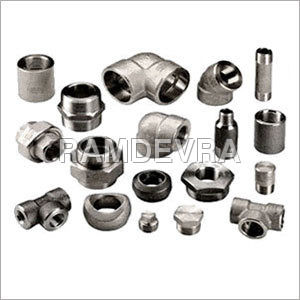
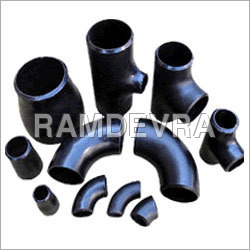
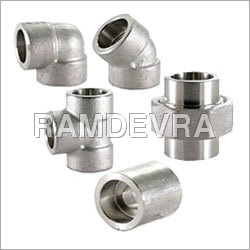
Leveraging on our expertise and well equipped state of the art infrastructure, we are offer our esteemed clients with an exclusive range of Forged Steel Fittings. Available in various sizes and shapes Forged Steel Fittings offered by us are perfect in finish, durable, easy to instal, reliable, corrosion proof and more. Moreover, we are source this range from certified manufacturers after stringently quality testing them on our predefined standards. These are offered by us at nominal industrial price.
Precision Engineered for Industrial StrengthForged steel fittings deliver exceptional strength and reliability, meeting demanding standards like ASME/ANSI B16.11. Their robust construction, with high tensile and yield strengths, ensures superior performance in high-pressure and high-temperature industrial environments, making them ideal for complex plumbing and fluid transfer systems.
Versatile Connection OptionsChoose between butt weld, threaded, or socket weld connections, each available in male and female types. This adaptability allows for seamless integration into various piping networks. With NPT or BSPT threading and broad size availability, these fittings suit a wide range of project requirements and specifications.
FAQ's of Forged Steel Fittings:
Q: How are forged steel fittings installed in industrial piping systems?
A: Forged steel fittings can be installed using butt weld, threaded, or socket weld connections, depending on system requirements. Installation should be performed by skilled professionals to ensure secure, leak-proof joining, always adhering to ASME standards for tolerances and procedures.
Q: What are the primary benefits of using forged steel fittings for industrial applications?
A: Forged steel fittings offer remarkable durability, resistance to high pressure and temperature, and excellent mechanical strength. These qualities make them a preferred choice for industries like oil and gas, chemical plants, and high-demand plumbing systems due to their long service life and reliability.
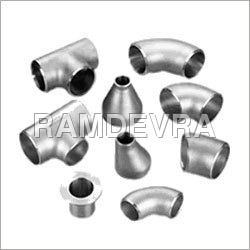
Q: When should I use a tee, elbow, reducer, or coupling fitting?
A: The choice depends on your piping system's configuration: a tee allows branch connections, elbows change flow direction, reducers transition between pipe sizes, and couplings join two pipes. Selecting the appropriate fitting type ensures optimal flow and functionality in your plumbing or industrial system.
Q: Where are these forged steel fittings typically utilized?
A: These fittings are commonly used in industrial plumbing, chemical processing, and oil & gas pipelines throughout India and internationally. Their robust construction makes them ideal for any high-stress piping application where safety and efficiency are paramount.
Q: What process ensures the quality and standards compliance of these fittings?
A: Each fitting is manufactured using high-grade forged steel, typically ASTM A105 or its equivalent. Rigorous inspection and testing are performed as per ASME/ANSI B16.11 standards to ensure precise tolerances, adequate strength, and compatibility with specified pressure and temperature ratings.
Q: What coating or surface treatment options are available for these fittings?
A: Forged steel fittings are offered with either a polished finish, shot blasted surface, or zinc coating for enhanced corrosion resistance. While some applications require no coating, zinc coating is typically chosen for demanding environments to protect against rust and corrosion.




 Send Inquiry


 Send Inquiry
 Send Inquiry
 Send SMS