Industrial Butt Weld Fittings About
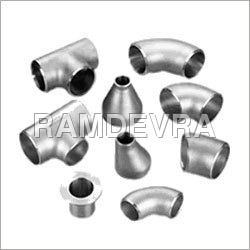
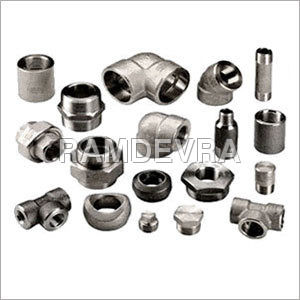
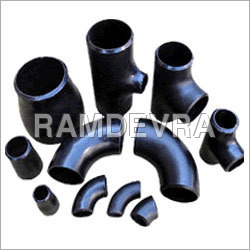
With a vast experience of this domain, we are offering our clients premium grade Industrial Butt Weld Fittings. These fittings are widely demanded for their features like robustness, sturdy construction, enhanced durability and dimensional accuracy. Used for joining two pipes together in the plumbing processes, these fittings are manufactured using the finest grade metal alloys. Further, these Industrial Butt Weld Fittings are manufactured in different designs and sizes to meet the varied needs of out reputed patrons and are offered at industry leading prices.
High-Performance Welded ConnectionsThese butt weld fittings offer robust welded connections, ensuring secure integration within any industrial piping or plumbing system. Their metal-to-metal sealing and standard wall thickness provide superior durability, while compatibility with high temperatures enables use in rigorous fluid applications. The absence of a coating preserves the stainless steel's natural resistance to corrosion and wear.
Wide Range of Industrial ApplicationsIdeal for fluid transport, these fittings are extensively utilized in chemical plants, oil and gas infrastructure, power stations, and more. Their rigid, round-section design and polished surface facilitate seamless flow and easy maintenance. Compliance with ANSI/ASME B16.9 standards allows them to fit reliably into systems governed by international codes and regulations.
FAQ's of Industrial Butt Weld Fittings:
Q: How are butt weld fittings installed in industrial piping systems?
A: Butt weld fittings are joined to pipes using welding techniques that create a strong and leak-proof connection. The ends of the fitting and pipe are aligned and welded together, ensuring a durable and seamless joint without the need for threading or additional sealing materials.
Q: What benefits does using 304/316 stainless steel fittings offer in fluid transportation?
A: Utilizing 304/316 stainless steel provides excellent resistance to corrosion and high temperatures. This material is widely chosen for its longevity, minimal maintenance needs, and ability to withstand challenging and corrosive environments common in industrial settings.
Q: When should metal-to-metal sealing fittings be used instead of other sealing types?
A: Metal-to-metal sealing fittings are recommended when dealing with high-pressure and high-temperature applications where chemical-resistant and dependable sealing is required. They are preferred over rubber or plastic seals for critical fluid transport and process lines.
Q: Where are these butt weld fittings most commonly used?
A: These fittings are frequently employed in industrial piping networks such as chemical processing plants, refineries, power generation facilities, and water treatment systems, where reliable, leak-proof connections are essential for safe and efficient operation.
Q: What is the process for selecting the right fitting shape for specific industrial needs?
A: Engineers assess system layout, flow requirements, and changes in direction or diameter when choosing among elbows, tees, reducers, and crosses. Selection ensures optimal flow control and minimizes pressure drop in complex fluid transport systems.
Q: How does the polished surface treatment benefit industrial applications?
A: A polished surface enhances the fitting's resistance to corrosion and facilitates cleaning, making it suitable for hygienic environments and reducing the risk of contamination in sensitive fluid processes.




 Send Inquiry


 Send Inquiry
 Send Inquiry
 Send SMS
 Call Me Free